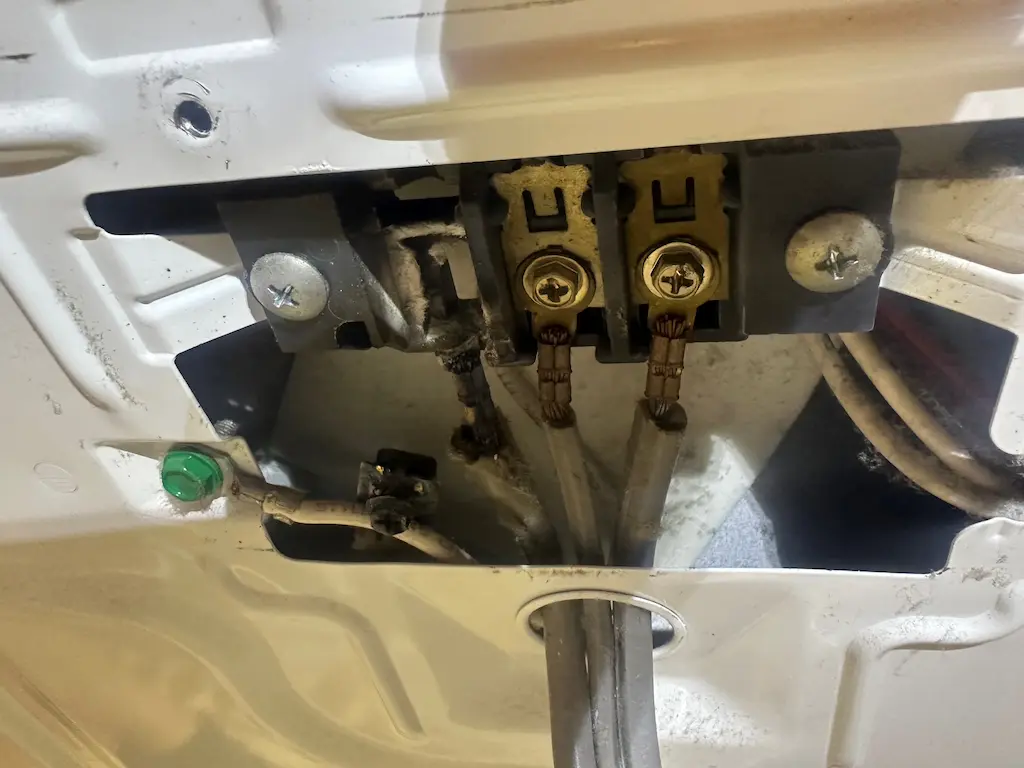
A customer in The Woodlands called us with a familiar complaint: the dryer wouldn’t turn on, and when it did, the control panel flickered. That combination usually points to a power problem somewhere upstream of the electronics — and this one turned out to be a real warning sign.
What We Found
Once we pulled the dryer and opened up the terminal block area, it was clear right away. One of the two hot line connections had been loose at the terminal for a while. A loose connection under a screw doesn’t just sit there quietly — every time the dryer cycled, current had to squeeze through a smaller and smaller contact point. That resistance turns into heat.
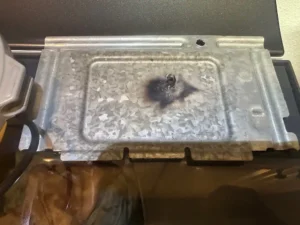
Over time, that heat did three things: it darkened and cooked the insulation around the wire, it discolored the terminal block itself, and it eventually let the wire arc against the terminal cover cap and the surrounding panel. What started as one loose screw ended as a scorched cavity a few inches from a mass of dry lint and a plastic housing — exactly the kind of hidden fault that causes house fires, not just appliance failures.
The Fix
We replaced the terminal block and the 3-prong power cord as a set — reusing a scorched terminal block or a cord with heat-damaged insulation is never worth the risk, even if part of it still tests fine. Once the new hardware was torqued down correctly, the dryer powered up and ran normally, panel included.
Why This Happens — And Why It’s So Common
This is one of the most preventable failures we see, and it’s almost always the same root cause: a hot line that wasn’t tightened enough when a cord was installed or replaced.
A few things make this worse over time:
- Vibration. Dryers shake. A screw that’s “close enough” on install day works its way looser with every cycle.
- Heat cycling. Dryers run hot. Metal expands and contracts, which can loosen a marginal connection even faster.
- Aluminum or oxidized copper strands. Older cords or oxidized wire ends don’t seat as tightly under a screw, so the margin for error is smaller to begin with.
None of that is unique to this dryer or this house. It’s physics, and it applies to any electric dryer or electric oven/range terminal block on the market.
What We Want Every Technician and DIYer to Know
If you’re replacing a dryer or range power cord yourself, or you’re a tech doing it as part of the job, two things matter more than anything else:
- Torque the hot line connections properly — and check them. Don’t just snug it and move on. A properly tightened terminal screw should hold the wire with no play at all. If you can wiggle the wire under the screw, it’s not tight enough. This isn’t a “close enough” job.
- Never skip or shortcut the ground. The ground wire’s job is to give any fault current a safe path back, away from the cabinet and away from anyone touching the unit. Whether you’re on a 3-prong setup with a bonding strap to the chassis or a 4-prong setup with a separate ground, that connection has to be solid and attached directly to the unit’s body — not just twisted on and tucked out of the way. A loose or missing ground doesn’t cause this kind of terminal failure, but it’s exactly what stands between a fault like this one and someone getting shocked.
Electrical failure is a real and documented cause of dryer-related home fires. According to NFPA research on home fires involving clothes dryers, electrical failure or malfunction is one of the leading factors behind dryer fire ignition, right alongside mechanical failure and heat sources placed too close to combustibles. A loose terminal connection like the one we found fits squarely into that category.
Frequently Asked Questions
My dryer’s control panel flickers on and off. Is that dangerous?
It can be. Flickering usually means an intermittent or degrading power connection somewhere in the circuit — often at the terminal block or cord. It’s worth having it checked before it turns into a dead dryer or, worse, a heat-damaged connection like the one in this job.
Can I just tighten a loose terminal screw myself instead of replacing the whole block?
If the terminal, wire insulation, or cord shows any discoloration, melting, or arcing damage, tightening the screw isn’t enough. Damaged metal and insulation don’t go back to full strength — the block and cord need to be replaced together.
How do I know if my dryer or range cord was installed correctly?
A licensed technician can check torque on the terminal connections and confirm the ground path is solid in a few minutes. If your dryer is older than the cord, or a previous owner or handyman did the last cord swap, it’s a good thing to have verified by a pro.
Does this happen with gas dryers too?
Gas dryers still run on 120V power for the drum motor, timer, and control board, so the same terminal and cord connections apply — just without the 240V heating element circuit that electric dryers have.
If your dryer isn’t turning on, the panel is flickering, or you just want a set of connections checked before they become a problem, PowerOn Appliance Repair Service handles dryer repair throughout The Woodlands, TX and the rest of our North Houston service area. We work for tomorrow, not just for today — which means we fix what caused the failure, not just the symptom in front of us.