
A GE Profile UltraFast Washer-Dryer Combo not drying is one of the most common complaints we see with ventless heat-pump laundry systems. A customer contacted our appliance repair team because their GE Profile 4.8 cu. ft. Smart UltraFast Electric Washer & Dryer Combo was completing every cycle, but the clothes were still damp.
Because this is a ventless heat-pump appliance, its drying system is much more complex than a traditional dryer. Our technician performed a complete diagnostic inspection to determine why the machine was running normally but no longer drying clothes properly.
If your GE Profile UltraFast Washer-Dryer Combo is not drying, the problem may be restricted internal airflow, excessive lint buildup, clogged air passages, drainage issues, faulty moisture sensors or a heat-pump system fault. During this repair, our technician discovered severe lint accumulation blocking airflow through the heat exchanger, preventing the appliance from drying clothes efficiently.
Why a GE Profile UltraFast Washer-Dryer Combo Is Not Drying
For a heat-pump dryer to operate correctly, warm air must circulate freely throughout the appliance. As air moves through the heat exchanger and internal airflow channels, moisture is removed from the clothing.
When lint and debris begin restricting this airflow, the machine may continue completing cycles while drying performance steadily declines.
Common symptoms include:
- Clothes remaining damp after a complete cycle
- Drying cycles taking much longer than normal
- Repeated cycle extensions
- Reduced internal airflow
- Moisture remaining inside the drum or around the door seal
The customer’s appliance displayed several of these symptoms, leading our technician to suspect an internal airflow restriction.
A Complete Teardown Was Necessary
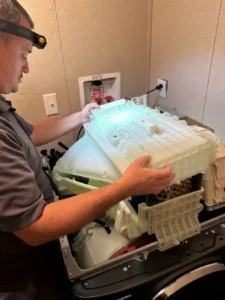
The blockage could not be reached through normal filter maintenance. Our technician carefully disassembled the washer-dryer combo to access the internal ductwork, airflow housing and heat-pump assembly.
This repair requires professional training. These appliances contain electrical components, sensors, water lines, refrigerant tubing and delicate aluminum heat-exchanger fins that can be easily damaged if handled improperly.
Once the upper housing and internal airflow chamber were removed, the source of the drying problem became immediately obvious.
What Our Technician Found
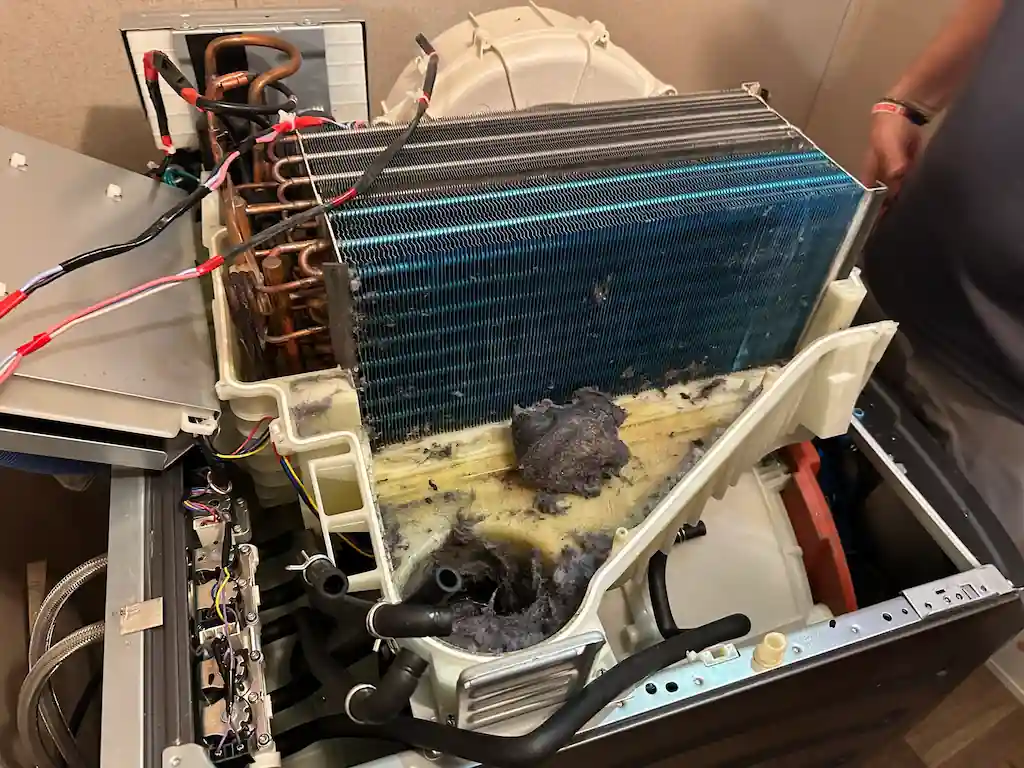
The internal airflow path was heavily clogged with compacted lint and debris. Large amounts of lint had accumulated around the heat exchanger and throughout the lower airflow chamber.
This blockage prevented sufficient air from circulating through the drying system. Although the appliance continued operating, it could no longer move enough warm air to efficiently remove moisture from clothing.
The photos from this repair clearly demonstrate how much lint can build up inside a ventless heat-pump washer-dryer combo. None of this debris was accessible through routine filter cleaning.
Why Restricted Airflow Causes Poor Drying
Unlike a conventional dryer, a ventless heat-pump dryer continuously recirculates air instead of exhausting it outdoors.
When airflow becomes restricted:
- Air cannot circulate properly through the heat exchanger.
- Moisture removal becomes much less efficient.
- Clothes remain damp after the cycle ends.
- The appliance repeatedly extends drying times.
- The fan, compressor and other components must work harder than intended.
In this service call, severe lint accumulation fully explained why the customer’s GE Profile UltraFast Washer-Dryer Combo was not drying properly.
The Repair
Our technician completely removed the accumulated lint and thoroughly cleaned the internal airflow system. Special care was taken to clean around the heat exchanger without damaging the delicate fins, wiring, sensors or refrigerant components.
Once cleaning was complete, the appliance was carefully reassembled and tested to confirm that airflow had been restored and every component was correctly positioned.
How to Help Prevent Internal Lint Buildup
Although internal lint accumulation cannot always be prevented, proper maintenance significantly reduces the likelihood of restricted airflow.
- Clean every accessible lint filter after each load.
- Remove lint around the door opening regularly.
- Avoid overloading the drum.
- Use only the recommended amount of HE detergent.
- Watch for gradually increasing drying times.
- Schedule professional service if routine maintenance no longer restores normal drying performance.
Never attempt a complete teardown unless you have proper training. These appliances contain electrical, plumbing and refrigeration systems that require specialized knowledge to service safely.
GE also provides maintenance recommendations through the GE Appliances Support website.
Is Your GE Profile UltraFast Washer-Dryer Combo Not Drying?
If your GE Profile UltraFast Washer-Dryer Combo is not drying, don’t assume the heat pump or control board has failed. Internal airflow restrictions are one of the most common problems we encounter during professional diagnosis.
A complete inspection can determine whether the issue is caused by lint buildup, restricted airflow, drainage problems, moisture sensors or a heat-pump system fault before unnecessary parts are replaced.
If your appliance is leaving clothes damp or taking much longer to dry than it used to, professional diagnosis can save both time and unnecessary repair costs.
You may also find these resources helpful:
Call 346-379-3809 to schedule your appointment today.
Frequently Asked Questions
Why is my GE Profile UltraFast Washer-Dryer Combo not drying?
Common causes include restricted internal airflow, excessive lint buildup, overloaded loads, drainage issues, faulty moisture sensors, or a heat-pump system problem. During this repair, severe internal lint accumulation was preventing proper airflow.
Does the GE Profile UltraFast Combo have a dryer vent?
No. This appliance uses ventless heat-pump technology that continuously recirculates air inside the machine. However, internal airflow passages can still become restricted by lint over time.
Can cleaning the lint filter solve poor drying performance?
Sometimes. However, lint can also accumulate deep inside the appliance where routine maintenance cannot reach. If drying performance continues to decline, professional service may be required.
Why are my GE Profile Combo drying cycles getting longer?
Long drying times may be caused by restricted airflow, oversized loads, drainage problems, moisture sensor issues, or a developing heat-pump system fault.
Can I clean the internal heat exchanger myself?
Cleaning the internal heat exchanger requires extensive disassembly around electrical wiring, refrigerant tubing, sensors, and water connections. A trained appliance technician should perform this repair.
How can I reduce internal lint buildup?
Clean all accessible filters regularly, avoid overloading the appliance, use the correct amount of HE detergent, and schedule professional maintenance if drying performance gradually declines.