Why Your Commercial Hoshizaki Ice Machine Needs More Than a “Wash Cycle”
If you run a restaurant, office, or medical facility in North Houston, your ice machine is probably running non-stop — and it’s probably one of the most overlooked pieces of equipment in the building. Most people assume the built-in “wash” mode on a Hoshizaki keeps things clean. However it doesn’t. Not on its own.
Here’s what we mean, and why it matters for your health inspection score, your ice quality, and the lifespan of the machine.
What the Built-In Wash Cycle Actually Does
Every Hoshizaki has a self-clean setting. It circulates a cleaning solution through the water system and rinses the evaporator plate. That’s useful; however, it only reaches what’s directly in the water path.
It does not clean:
- The ice curtain and chute, where mold and slime build up in the dark, damp gap behind the plate
- The corners of the ice storage bin
- Calcified mineral deposits that harden onto plastic components over months of hard-water use
- Hidden spots behind panels that the wash cycle simply can’t reach
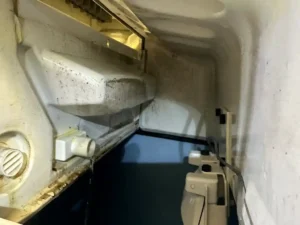
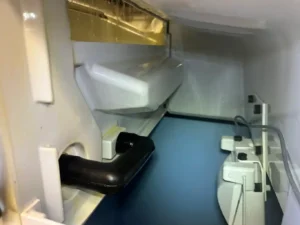
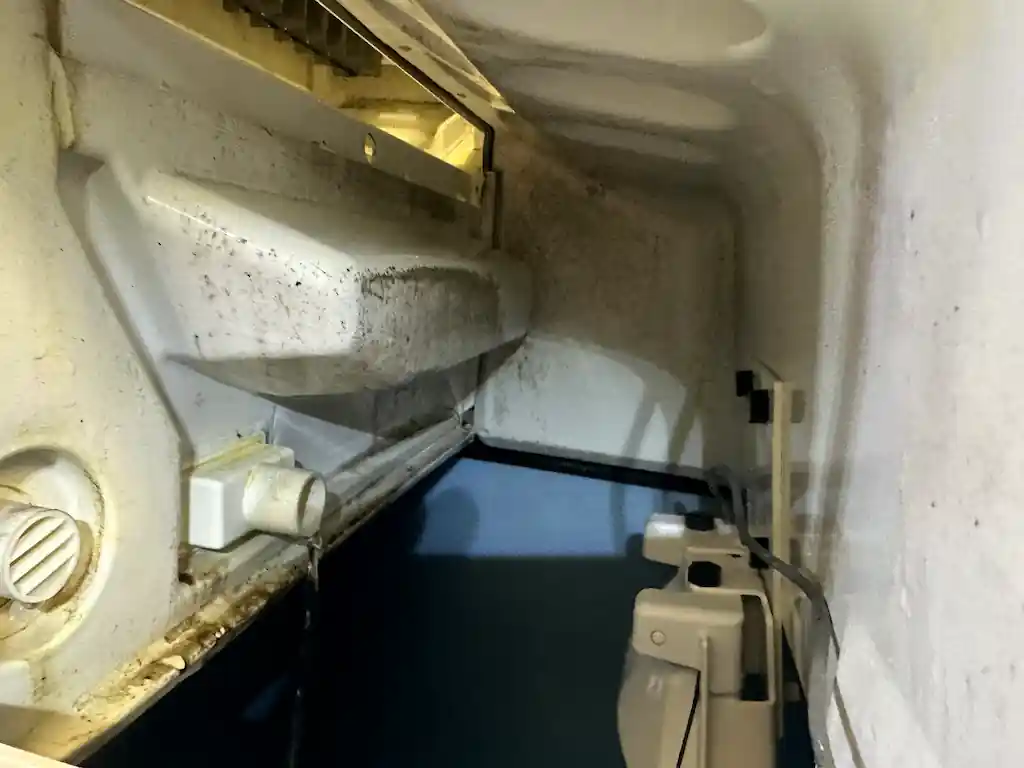
That’s exactly what we found on this job. The photos tell the story — mineral scale crusted onto the curtain, dark buildup lining the corners of the housing, and residue the customer had no way of seeing without pulling the machine apart.
What a Real Deep Clean Looks Like
When we do a full deep clean on a commercial Hoshizaki, we don’t just run the wash cycle and call it done. Instead, our process includes several additional steps:
- Disassemble every removable component — curtain, bin panels, water distribution tube, and float assembly all come out.
- Scrub calcified surfaces by hand with a brush, targeting the mineral scale that builds up in corners and seams the wash cycle never touches.
- Spray and soak deep, inaccessible spots with a commercial-grade cleaning solution designed to break down mineral and biofilm buildup.
- Rinse and dry every component before reassembly, so nothing goes back together damp.
- Run the machine’s built-in wash and descale cycle on the evaporator at the same time, so the internal water system gets treated alongside the manual deep clean.
The result is a machine that’s clean in the places you can see and the places you can’t.
Why This Matters for Your Business
- Health code compliance. Mold and slime buildup in an ice machine is one of the most common violations inspectors flag in commercial kitchens.
- Ice quality and taste. Mineral scale and biofilm affect how ice tastes and how clear it looks. As a result, customers notice.
- Equipment lifespan. Scale buildup makes the compressor and water system work harder. Overtime, this shortens the life of an expensive commercial unit.
- Fewer surprise breakdowns. A lot of the “no ice production” service calls we get trace back to buildup that a routine deep clean would have caught early.
How Often Should You Clean It?
For most commercial Hoshizaki units running daily, we recommend a full deep clean every 6 months. High-volume locations — busy restaurants, medical offices, gyms — may need it more often depending on water hardness and usage.
Serving North Houston’s Commercial and Residential Ice Machines
PowerOn Appliance Repair Service provides ice machine deep cleaning and repair for Hoshizaki, Scotsman, and other major brands across Spring, The Woodlands, Tomball, Katy, Cypress, Montgomery, Magnolia, Conroe, Willis, Huntsville, and Shenandoah, TX.
If your ice has an off taste, your bin has visible buildup, or it’s just been a while since your last deep clean, we’re happy to take a look.
Ready to schedule a deep clean?