
Ice Buildup Inside Your Freezer? Different Types of Ice Can Point to Different Problems
Ice accumulation inside a freezer is never normal, but not all ice buildup has the same cause.
The appearance, texture, and location of the ice can provide important clues about what is happening inside your refrigerator.
Understanding these differences can help homeowners identify problems earlier and avoid costly repairs.
Snow-Like Frost or Soft White Ice
If you notice fluffy, snow-like frost covering shelves, food packages, drawers, or freezer walls, warm air is likely entering the freezer compartment.
This usually indicates an air leak.
Common causes include:
- Worn or damaged door gaskets
- Torn door seals
- Dirty gasket surfaces
- Doors left slightly open
- Misaligned doors
- Sagging door hinges
- Objects preventing the door from closing completely
When warm humid air enters the freezer, moisture condenses and freezes, gradually creating layers of white frost.
Typical symptoms include:
- Frost around door openings
- Snow accumulation on food packages
- Excessive frost on shelves
- Moisture near the door gasket
- Increased compressor run times
In many cases, replacing or adjusting the door gasket solves the problem.
Thick Clear Ice on the Freezer Floor
Hard, solid ice accumulating at the bottom of the freezer often points to a drainage issue.
Many refrigerators use a defrost system that melts frost from the evaporator coil during automatic defrost cycles.
This water is designed to flow through a drain opening into a drain pan underneath the refrigerator.
When the drain becomes blocked or frozen, water cannot escape properly.
Instead, it refreezes inside the freezer.
Possible causes include:
- Frozen evaporator drain
- Restricted drain tube
- Clogged drain pan
- Debris inside the drain channel
- Improper drainage after defrost cycles
Common signs include:
- Thick sheets of ice on the freezer floor
- Ice beneath baskets or drawers
- Water appearing after defrost cycles
- Ice buildup returning shortly after removal
Ice Around the Ice Maker
Ice concentrated near the ice maker area may indicate a problem with the water supply system.
Potential causes include:
Frozen Ice Maker Fill Cup
The fill cup directs water into the ice maker mold.
If this component freezes, incoming water cannot enter properly and may overflow into the freezer compartment.
Symptoms include:
- Water spilling during fill cycles
- Reduced ice production
- Ice buildup beneath the ice maker
- Water freezing along the rear freezer wall
Defective Water Inlet Valve
A failing water valve may not close completely after the fill cycle ends.
Even a slow drip can create substantial ice buildup over time.
Signs include:
- Icicles near the ice maker
- Random ice accumulation
- Ice inside the fill tube
- Oversized ice formations around the fill area
Ice Maker Mechanical Failure
An aging or malfunctioning ice maker can also contribute to ice buildup.
Examples include:
- Incorrect fill timing
- Cracked ice molds
- Overflowing ice trays
- Incomplete harvest cycles
- Internal leaks
These conditions may cause water to escape where it should not, eventually freezing inside the freezer.
Today’s Repair: GE Profile Built-In Refrigerator
Today’s service call involved a GE Profile built-in refrigerator that had developed significant hard ice accumulation.
Every time the ice maker requested water, the water supply spilled directly into the freezer instead of entering the ice maker properly.
Inspection revealed a frozen ice maker fill cup.
Over time, the overflowing water created thick ice buildup on:
- The freezer floor
- The rear freezer wall
- The drain pan area
- The evaporator drain line
To correct the issue, we:
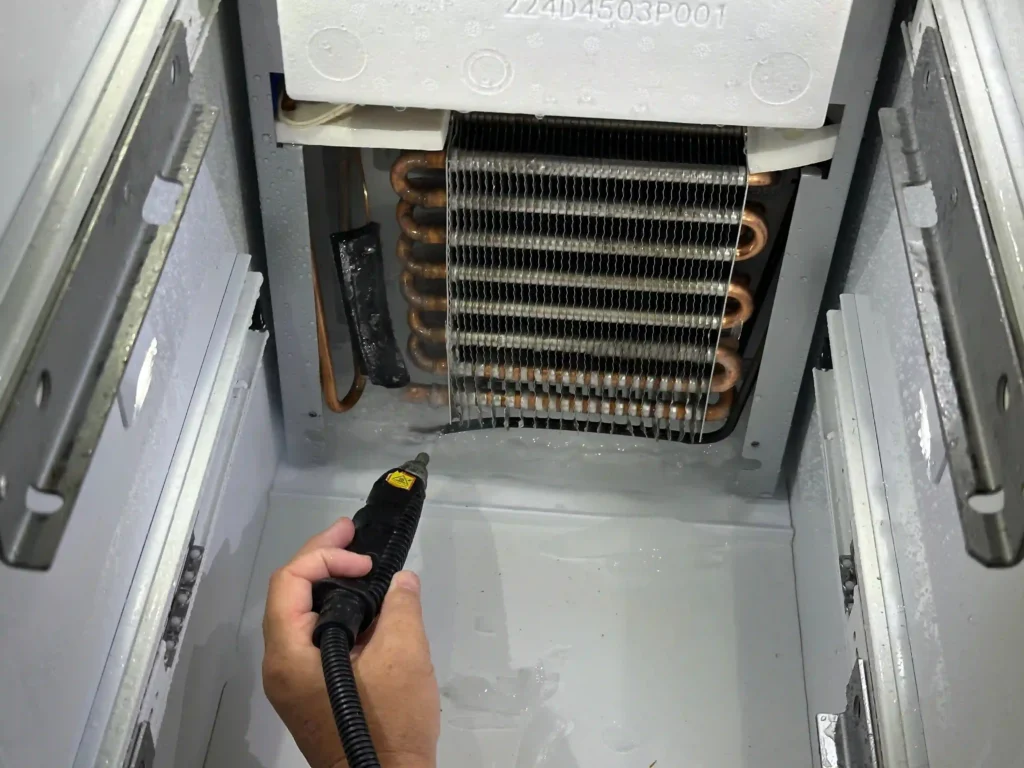
- Completely defrosted the freezer compartment
- Removed the rear freezer panel
- Eliminated heavy ice accumulation
- Defrosted the fill cup
- Opened the frozen drain line
- Cleared the drain pan
- Dried the entire compartment
- Cleaned all affected areas
- Tested the ice maker operation
- Verified proper water flow
Once water was able to enter the ice maker correctly again, the system returned to normal operation.
The Bottom Line
The type of ice inside your freezer often tells a story.
Snow-like frost usually indicates warm air intrusion.
Solid sheets of ice commonly point to drainage issues.
Ice around the ice maker often suggests problems with the fill cup, water valve, or the ice maker itself.
If you notice recurring ice buildup, don’t simply chip away the ice and hope it goes away. Identifying the underlying cause early can help prevent leaks, cooling problems, and more expensive repairs down the road.
Frequently Asked Questions
What causes snow-like frost inside a freezer?
Fluffy, snow-like frost usually means warm, humid air is getting into the freezer. Common causes include worn or torn door gaskets, dirty gasket surfaces, misaligned doors, sagging hinges, or something keeping the door from closing completely.
Why is there thick, clear ice on the bottom of my freezer?
Hard ice on the freezer floor often points to a drainage problem. When the defrost drain becomes blocked or frozen, melted water can’t reach the drain pan and refreezes inside the freezer.
Why is ice building up around my ice maker?
Ice around the ice maker usually points to the water supply system, such as a frozen ice maker fill cup, a water inlet valve that doesn’t close completely, or a malfunctioning ice maker that overflows or leaks.
What is an ice maker fill cup, and what happens if it freezes?
The fill cup directs water into the ice maker mold. If it freezes, incoming water can’t enter properly and spills into the freezer, causing reduced ice production and thick ice on the freezer floor and rear wall.
Can I just chip away the ice buildup in my freezer?
Chipping away ice doesn’t fix the cause, and the buildup usually returns. Finding the underlying problem early helps prevent leaks, cooling problems, and more expensive repairs later.